
Wellbeing Coaching

Wellbeing Coaching is a free service through the Office of Wellbeing that is available for students, faculty, and staff on the Reynolda campus.
What is Wellbeing Coaching?
Wellbeing Coaching is an evidence-based practice designed to help you reach your personal health and wellbeing goals. Health and wellbeing coaching is structured around the changes that you want to make in your life when you are ready to make them – you are empowered through this process to identify the life you want to be living and are not told by a coach what your life “should” look like.
Certified health coaches meet one on one with you to provide support and accountability to reach your health and wellbeing goals over a period of weeks together. Coaches apply strategies and practical skills as they partner with you to work through lifestyle challenges and to help you reach a quality of life that is meaningful, self-sustaining, healthy, and value-driven. If you’re ready to make healthy, goal-directed changes in your life – Wellbeing Coaching is for you!
What types of goals can Wellbeing Coaching support?
- Stress Management
- Resiliency
- Time Management
- Sleep Hygiene
- Chronic Disease Management
- Self Care
- Lifestyle Management
Schedule a Session With One of our Wellbeing Coaches
Adriana Piekarewicz, MS, NBC-HWC

Adriana’s mission is to help others develop the strategies and self-awareness needed to create meaningful, fulfilling lives. She strives to provide a safe and supportive space where individuals can process their emotions, navigate challenges, and better understand what they need to feel balanced, healthy, and fulfilled.
Adriana completed her undergraduate studies at Duke University, where she earned a B.A. in Psychology and later earned her M.S. in Sport Psychology from Florida State University, graduating in 2013 with a published thesis. Adriana is also a National Board Certified Health & Wellness Coach and holds a Mindfulness Certification through Mindfulness Institute for Emerging Adults (MIEA). She incorporates mindfulness and meditation practices into her coaching to help individuals build greater self-awareness, manage stress, and create sustainable wellbeing.
Her own experience as a competitive runner has deeply shaped her approach. During the four years she spent pursuing her goal of qualifying for the 2020 U.S. Olympic Trials in the marathon, she encountered numerous setbacks, challenges, and moments of uncertainty. Ultimately, qualifying for and competing at the Olympic Trials reinforced one of the most important lessons she carries into her work today: the journey matters just as much as the destination.
Today, Adriana’s work extends far beyond athletic performance. She is passionate about helping people navigate periods of growth, change, uncertainty, and challenge while developing a stronger understanding of themselves. Drawing from positive psychology, strengths-based approaches, mindfulness, meditation, and intentional goal setting, she helps clients identify what matters most to them and take meaningful steps toward creating a life that feels authentic, balanced, and fulfilling.
Adriana’s first language is Spanish and she is comfortable conducting sessions in Spanish, if preferred by the client.

Andra Farrand, CHWC
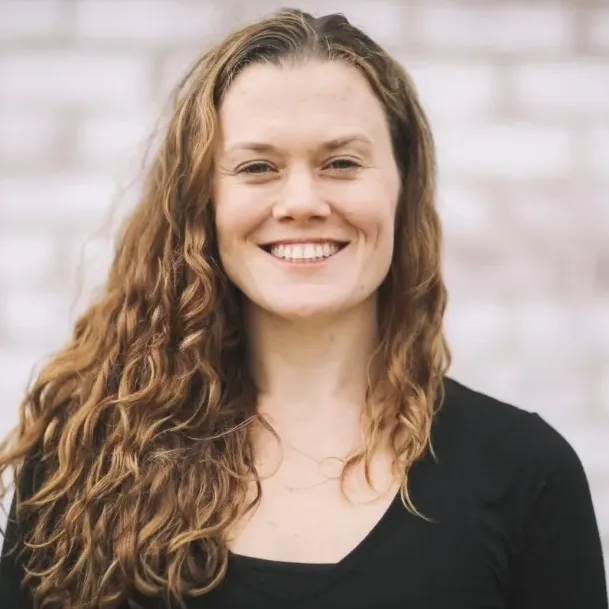
Andra believes that meaningful change begins with creating space to reflect, reconnect with what matters, and take intentional steps forward. As a Health and Wellbeing Coach, she strives to create a supportive and encouraging environment where clients can explore their goals, strengthen their mindset, and discover strategies that support personal growth and overall wellbeing. She believes that progress looks different for everyone and enjoys helping clients recognize their strengths, build self-awareness, and create sustainable change.
Andra has always been curious about health and wellbeing, human development, and the many ways we can support people in reaching their unique potential. She graduated from Guilford College with a degree in Sport Medicine and went on to study Health and Wellbeing Coaching through Duke Integrative Medicine. She is also a certified mindful meditation teacher in the Insight/Vipassana tradition, having trained through the University of California, Berkeley’s Greater Good Science Center with renowned teachers Tara Brach and Jack Kornfield. These experiences have shaped her approach to coaching and provided her with a range of tools to help clients navigate change, overcome challenges, and move toward goals that are meaningful to them.
Andra believes that self-awareness, encouragement, mindfulness, and small intentional changes can create lasting shifts in how we approach our lives. She uses a supportive, strengths-based approach to help clients meet themselves where they are, explore what matters most, and identify practical steps toward greater balance, fulfillment, and wellbeing. She sees the coaching process as a collaborative journey, one that allows clients to build on their existing strengths while creating space for growth and possibility.
In her personal life, Andra enjoys spending quality time with her husband, two daughters, and sweet dogs. She also finds joy and grounding through her yoga and meditation practice, traveling, and baking.
Michelle Ford (’10), CHWC

Michelle seeks to be an ally and partner to clients who want to make a change and improve their quality of life. She enjoys working with clients on a variety of topics and seeing them take steps to make sustainable lifestyle changes. She loves working with clients to seek progress over perfection in all aspects of their lives.
Michelle has always been interested in health and wellness and graduated from Wake Forest with a degree in Health & Exercise Science. After graduating, she worked in physical therapy and then in sales for a few years until she needed a lifestyle change. After returning to Wake on staff, Michelle found her niche working in the Office of Wellbeing. Through her work supporting the Wellbeing Coaching program, she discovered a passion for health and wellness coaching. She is excited to work with clients at the university and help them make progress on achieving their goals, managing stress, and finding fulfillment.
Michelle is passionate about supporting all those who are constantly juggling many responsibilities. To support her own wellbeing, Michelle enjoys reading, taking walks, playing tennis and traveling with her family.

Program Structure
Traditional Coaching
The Office of Wellbeing is offering sessions for wellbeing coaching starting in late August. Clients will meet with their coach for an initial session, and then bi-weekly for the semester, for a total of 5-7 sessions. Sessions will be scheduled directly with the coach and there is some flexibility to accommodate skipping a week or moving a session, if needed. Sessions will be 45-60 minutes long and will take place in-person or via zoom.
To register for traditional coaching, an initial session appointment can be made by selecting a coach below and then clicking the scheduling button linked below their background information. If none are available, start with a drop-in session.
Drop-In Coaching
We offer drop-in hours for client to find out more about what coaching has to offer, to talk through making a decision, set up a daily schedule, or to discuss other short-term goals. Drop-in coaching offers the opportunity to see what coaching is like as you look at situations from all angles and get a different perspective, without a longer-term commitment. You can choose to move to traditional coaching after a drop-in session, but it is not required.
Fall 2026 Drop-In Schedule:
Tuesdays: 1:30-3pm, in the Office of Wellbeing, Wellbeing Center A321. You can pre-book a session or walk in during drop-in hours.
Please reach out to if you have questions.
To make an appointment for traditional coaching, select a coach and click the scheduling button linked below their background information. If none are available, start with a drop-in session. Please reach out to with any questions or issues.
Do I want to see a coach or a counselor?
The differences between counseling and coaching can be confusing. Both options will work with you to empower and enable you to move forward to a more positive life experience. Both services ask for your input and perspective rather than giving advice and telling you what to do.
The main difference is based on where your focus needs to be in order to live fully present and able to wellbeing – either on healing or on growing to reach your full potential. If you have a wound, pain, or hurt that aches whenever anyone pokes it or that is invasive enough to affect your daily functioning, then counseling might be a better fit right now. Many people start with counseling and move to coaching as they heal mentally and emotionally. If you are focused on setting goals or changing your lifestyle in order to build healthier life patterns, then coaching might be a more appropriate starting point.
| Wellbeing Coaching | Counseling |
|---|---|
| Goal is to help people be well | Goal is to help people gain mental health |
| If you say, “I want/desire it to be better” | If you say, “I need it to function” |
| Focuses on changing behavior, building strengths, and setting goals | Focuses on emotional and mental healing |
| Is about results and solutions | Is about solving problems |
| Deals with conscious awareness and goals | Often deals with underlying issues and unconscious drives |
| A coach cannot act as a counselor | A counselor can also act as a life coach |
| Provides goal-setting and skill development through collaborative conversations | Provides diagnosis and treatment |
| Focus on what the client wishes to transform | Focus on gaining insight |
| Private, not confidential | Confidential |
For any additional questions regarding Wellbeing Coaching, please email wakewell@wfu.edu.